
PARTICIPATE
EXPLORE
LEARN
CREATE
SHARE
Visitor Gamification
for Museums, Zoos and Attractions
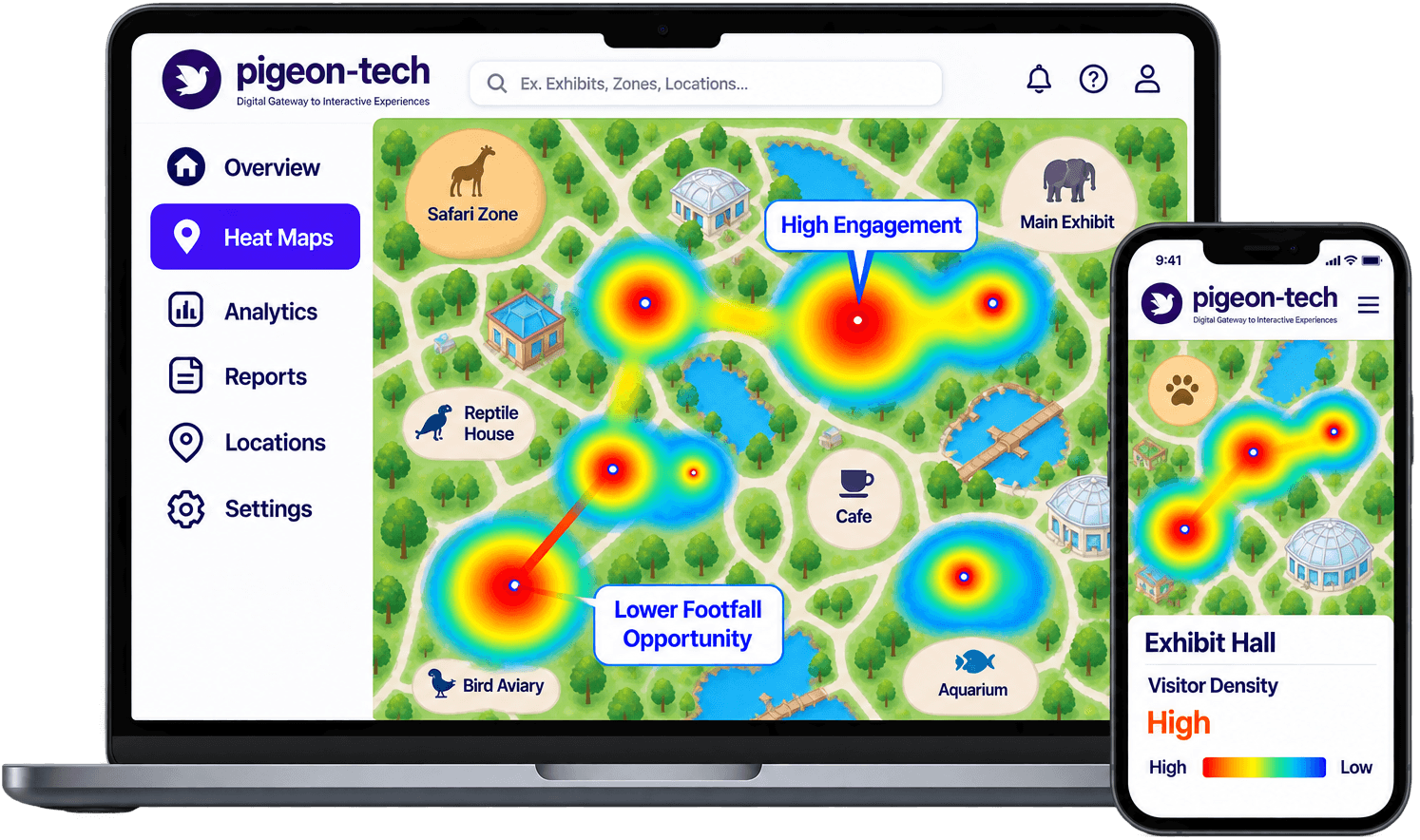
How It Works
From arrival to exploration, the app guides every step for an effortless experience.
Search a destination
Find exhibits, amenities, entrances and more.
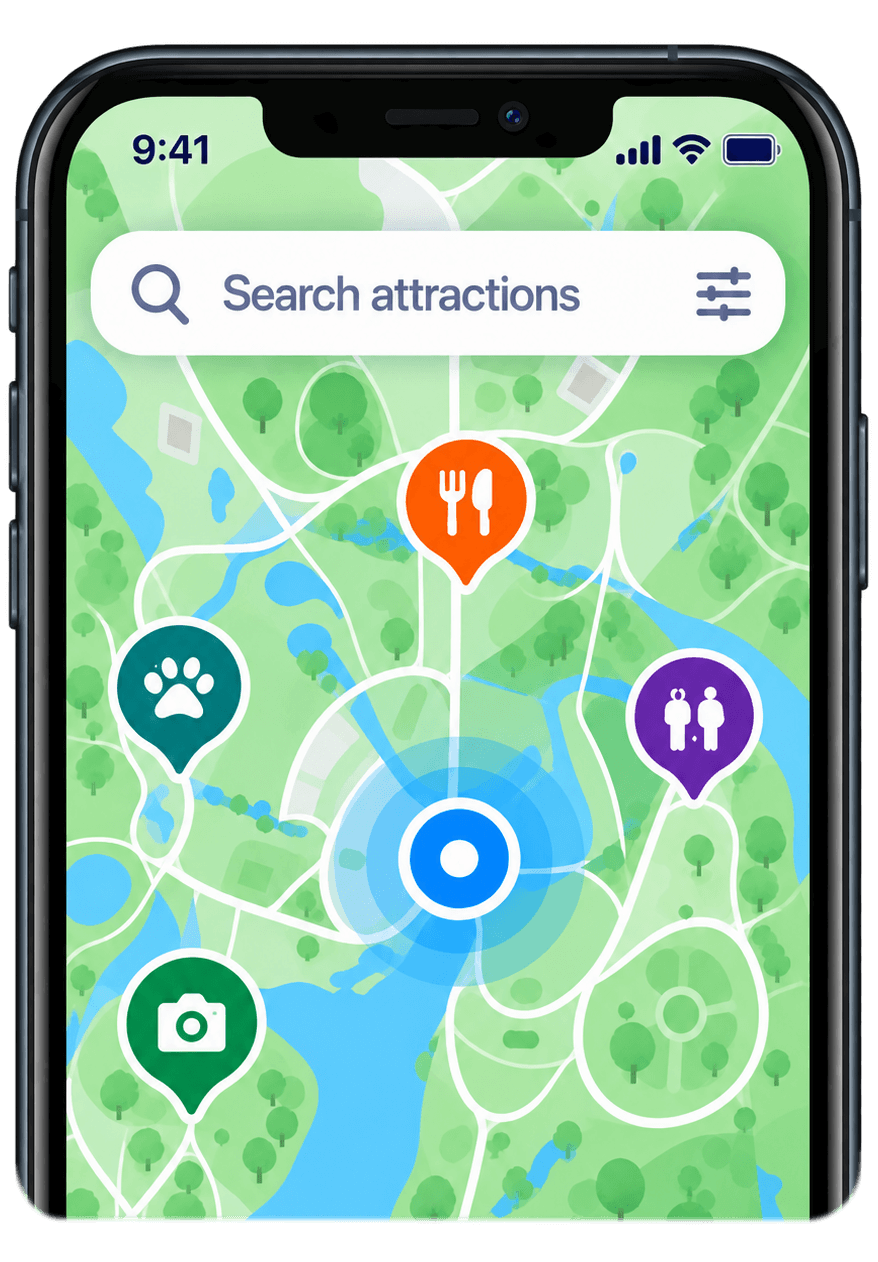
View the map
See points of interest and discover nearby experiences.
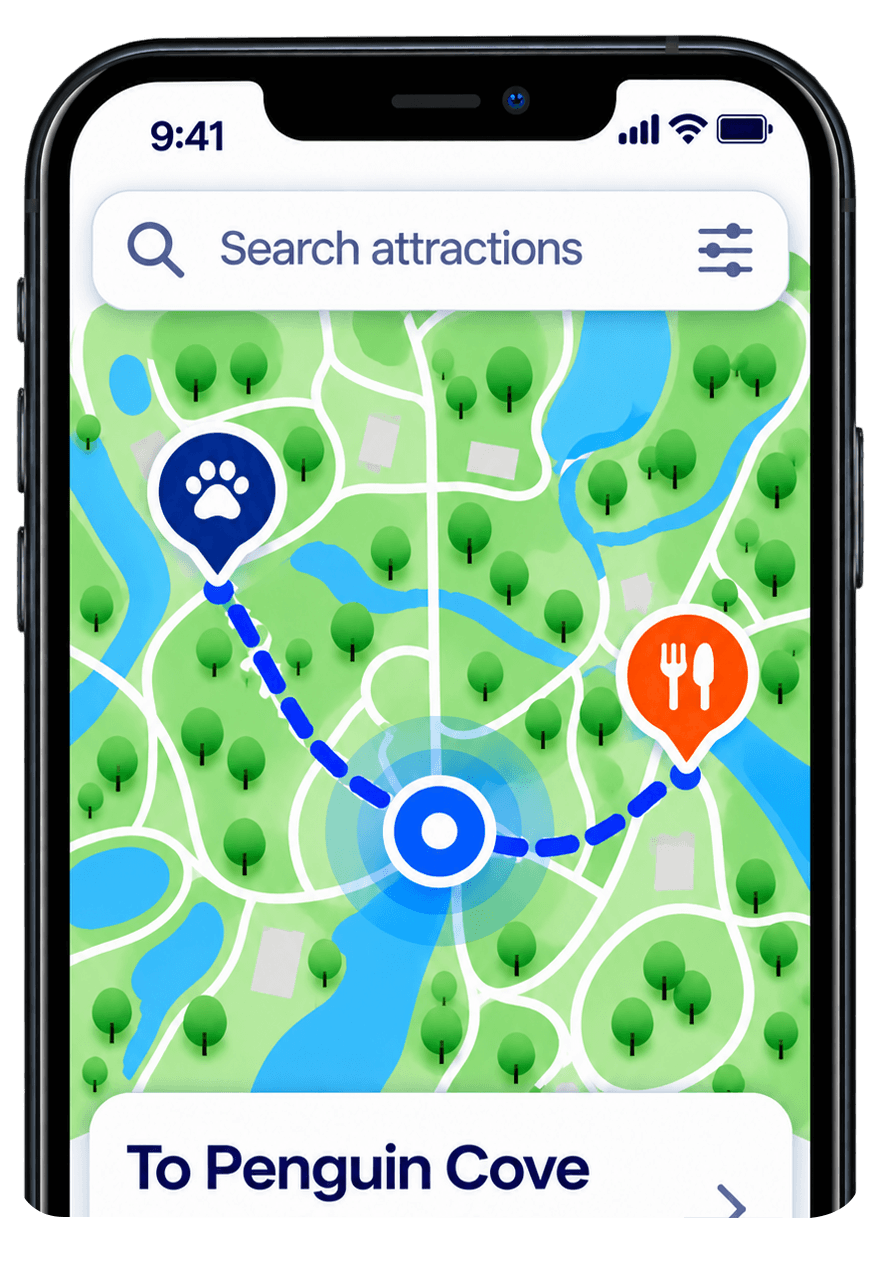
Follow the route
View available walking guidance to your destination.
Key Capabilities
A digital wayfinding system designed for real visitor needs.
Interactive Maps
Find exhibits, attractions and amenities across your venue.

Points of Interest
Explore destinations with rich content, photos and filters.
Visitor Information
Access nearby events, facilities, accessibility options and more.
Route Guidance
View suggested walking routes between locations on indoor and outdoor maps.
Visitor Journey
A simple journey. A better day for every visitor.
Find
Search for an attraction, exhibit, amenity or entrance.
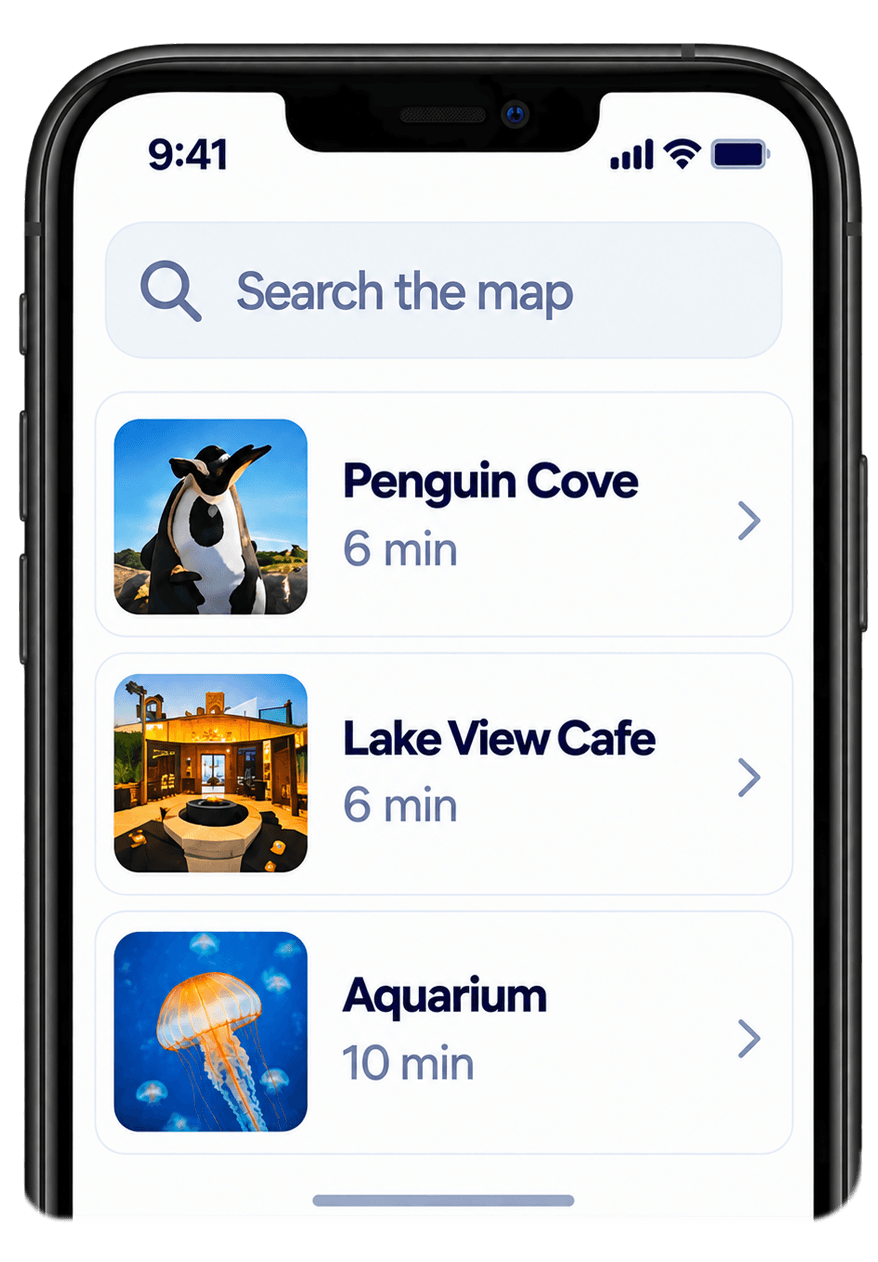
Explore
View the interactive map and destination information.
Navigate
View the available route to your destination.
Discover
Explore nearby experiences and make the most of your visit.
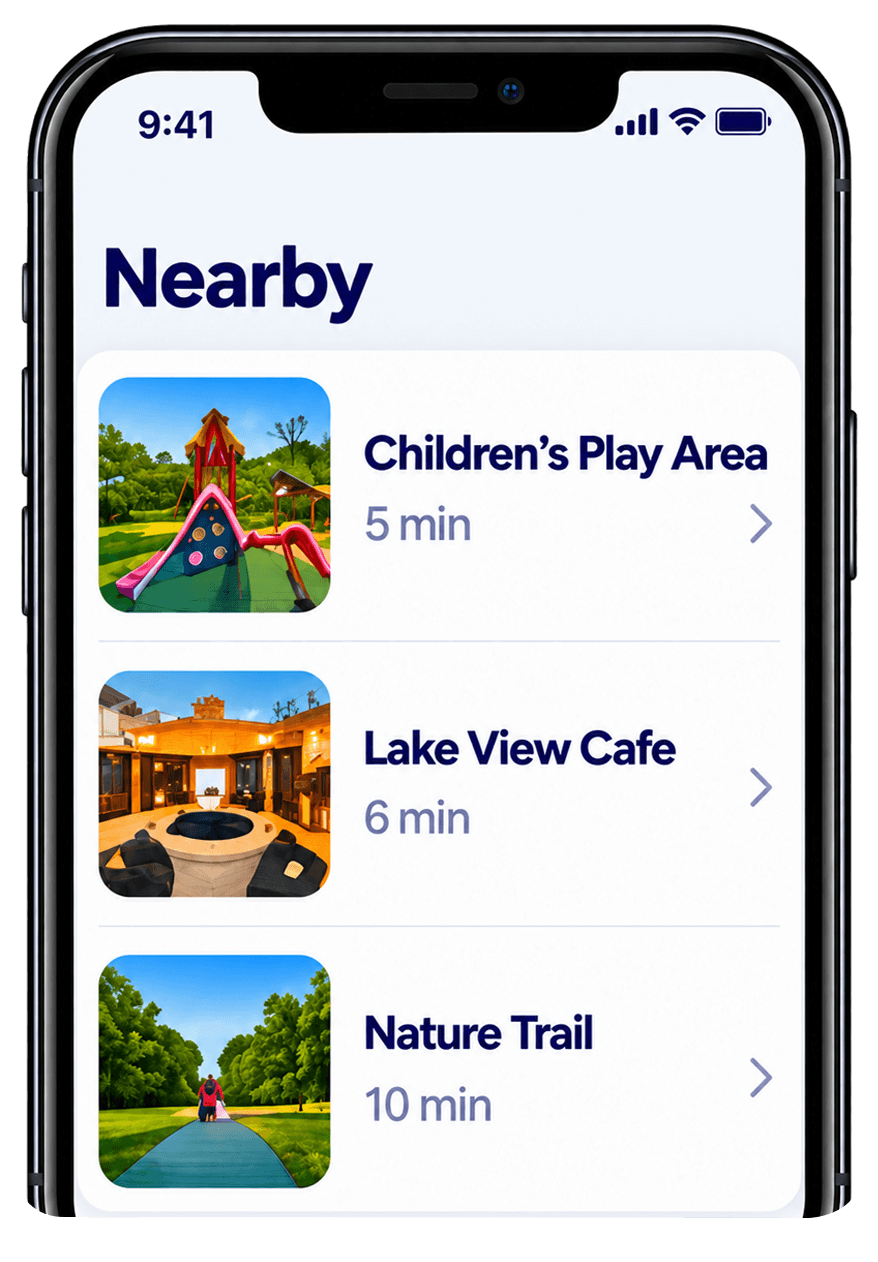
Value for Visitors and Venue Teams
From arrival to exploration, the app guides every step for an effortless experience.
For Visitors
For Venue Teams
See Digital Wayfinding in Action
Frequently Asked Questions
Visitor gamification uses game mechanics and playful interactions to encourage participation, discovery, and learning during a visit.
In Pigeon-Tech, gamification can include configured experiences such as:
1. Quizzes
2. Challenges
3. Treasure hunts
4. Points
5. Badges
6. Leaderboards
7. Progress tracking
8. Photo-frame experiences
9. AR or recognition-based interactions where supported
The goal is not simply to add games. A strong gamified experience should support a clear visitor objective, such as learning about an exhibit, exploring more of a venue, or participating in a themed activity.
Pigeon-Tech can support different types of interactive visitor experiences depending on the venue and deployment.
These can be grouped into three main categories:
Learn Through Play
1. Interactive quizzes
2. Educational challenges
3. Knowledge-based activities
Explore Through Play
1. Digital treasure hunts
2. Location-based challenges
3. Themed trails and discovery activities
Create & Share
1. Photo frames
2. Branded photo experiences
3. Character or animal overlays
4. AR-style experiences where supported
5. Shareable visitor moments
Additional mechanics such as points, badges, leaderboards, rewards, and completion tracking can be included where they are part of the agreed configuration.
Gamification can support educational goals by encouraging visitors to interact with information rather than only read or observe it.
For example, a museum, zoo, or attraction can use quizzes or challenges to encourage visitors to:
1. Recall facts
2. Examine exhibits more closely
3. Follow a themed learning path
4. Answer questions related to animals, artifacts, or locations
5. Participate in family or group activities
The activity should be designed around a clear learning objective.
Completing a quiz or challenge does not automatically prove learning, so venues should combine participation data with appropriate feedback or educational evaluation where needed.
Yes, Pigeon-Tech gamification can include configured mechanics such as points, badges, rewards, leaderboards, or completion recognition when they are part of the selected experience.
Not every gamified activity needs all of these mechanics.
For example:
1. A family quiz may only show a score.
2. A treasure hunt may use progress and a completion badge.
3. An event challenge may use a leaderboard.
4. A museum learning activity may focus on participation without competition.
The appropriate mechanics should be chosen based on the audience, experience goal, and venue requirements.
Yes. Gamified visitor experiences can be designed for different age groups, but the content and interaction should be appropriate for the intended audience.
For example:
1. Younger visitors may respond better to simple quizzes, visual challenges, or photo experiences.
2. Families may enjoy treasure hunts and collaborative activities.
3. Students may participate in curriculum-related quizzes or educational challenges.
4. Adult visitors may prefer discovery-based activities, themed trails, or knowledge challenges.
Pigeon-Tech allows the experience to be configured around the audience and visitor objective rather than using one game format for everyone.
No. A gamified experience does not automatically require special hardware.
Many experiences can operate through the visitor’s mobile device using:
1. Quizzes
2. Challenges
3. Digital content
4. Treasure hunt clues
5. Progress tracking
6. Photo experiences
Some experiences may use additional technologies such as:
1. QR codes
2. NFC
3. Beacons
4. Location services
5. AR overlays
6. Recognition technology
These technologies should only be included when they support the intended experience and are part of the configured deployment.
Gamification content can be updated according to the administration and content-management capabilities included in the deployment.
Depending on the configuration, venue teams may be able to update items such as:
1. Quiz questions
2. Answers
3. Images
4. Challenge content
5. Treasure hunt clues
6. Themes
7. Participating locations
8. Rewards or completion messages
The exact content that administrators can manage should be defined during implementation so the venue understands which changes can be made directly and which require additional support.
Pigeon-Tech can track supported interaction events when analytics are configured for the gamified experience.
Depending on the implementation, this may include:
1. Experience starts
2. Quiz attempts
3. Answers or activity interactions
4. Treasure hunt progress
5. Challenge completions
6. Badge or reward events
7. Overall completion
8. Content interactions
The exact analytics available depend on the feature configuration and tracking setup.
Participation data can help teams understand which experiences are being used, but completion alone should not be treated as proof of learning or visitor satisfaction.
Explore Visitor Analytics
Visitor gamification is the broader category of interactive participation techniques used across the visitor journey.
It can include:
Quizzes
Challenges
Points
Badges
Leaderboards
Photo experiences
Educational games
Treasure hunts
A digital treasure hunt is one specific type of gamified experience in which visitors follow clues, move through locations or exhibits, complete activities, and progress toward a final discovery or completion point.
In Pigeon-Tech:
Gamification = the broader capability
Treasure Hunt = one gamified experience
Explore Interactive Treasure Hunts
